
04Home automation
Home automation with Shelly devices
We design and install home automation, notably with Shelly devices: control of lighting and blinds and measurement of consumption, in a house that is already built.
Service data
- Scope
- Design and installation
- Equipment
- Shelly modules: relays, blinds, energy metering
- Where they go
- Behind the switches or in the switchboard
- Control
- Existing switches, phone, schedules and scenes
- Area
- Samora Correia and about 50 km around it: Ribatejo, Lisbon and the Setúbal peninsula
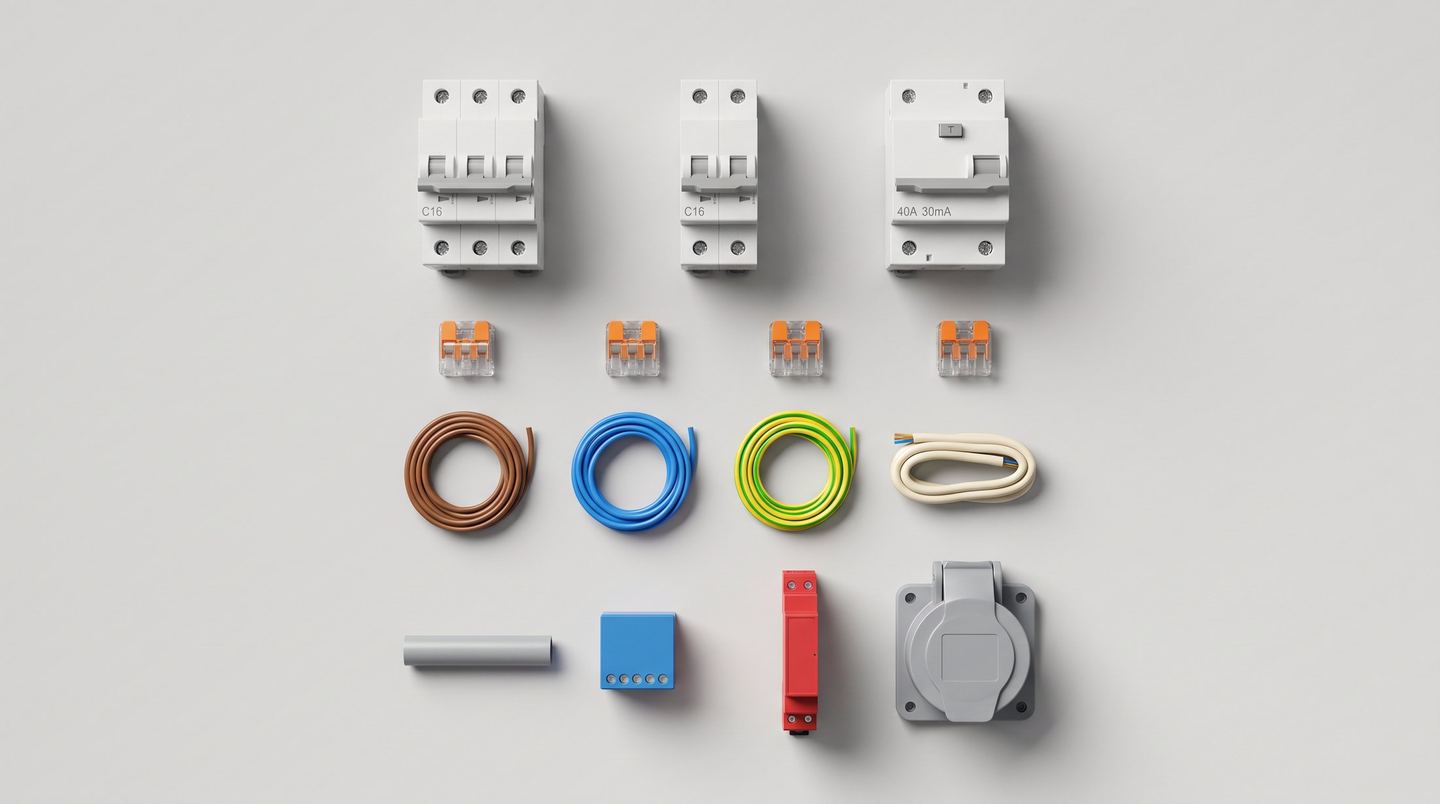
Home automation (domótica in Portuguese) is the automatic or remote control of parts of the electrical installation: lights, blinds, sockets, water heating. In a smart home done properly, the switches go on working as they always have; what changes is that the house also follows a schedule, a rule or your phone. We work mainly with Shelly devices, which are made to be added to an existing installation.
What can be automated without rewiring
- Lighting. A relay module behind the switch lets you turn a lighting circuit on and off and put it on a schedule, keeping the wall switch.
- Electric blinds. A dedicated module drives the blind motor: up, down, stop at a position, follow a timetable.
- Larger loads. Water heater, pool pump, irrigation: switched by schedule or by rule, directly or through a contactor in the switchboard.
- Energy metering. Some modules measure the energy of the circuit they are on. In the switchboard, dedicated meters follow the total consumption of the home or of one heavy circuit.
- Scenes. "Leaving home" switches off what should not stay on; "night" lowers the blinds and turns off the outside lights.
How Shelly modules work
They are small electronic modules fitted in the wall box, behind the switch or socket, or on the rail in the switchboard. They connect to the home's Wi-Fi and are controlled from an app, by schedules or by rules. According to the manufacturer, they work on their own on the local network; access from outside the home depends on the router and the internet connection. We set the modules up so that the wall switch still controls the light when the network fails.
Where automation meets the switchboard
An automation module is a device connected at mains voltage. It takes up space in the box, has a current limit and is protected by the circuit breaker of the circuit it sits on. Before proposing anything, we check three things:
- whether the wall boxes have the space and the conductors needed. Many modules need both live and neutral, and in older installations the neutral does not always pass through the switch;
- whether the load on each circuit is within the rating of the module planned;
- whether the switchboard has room for the rail-mounted devices: energy meters, contactors, board modules.
When the box will not do, the module goes in the switchboard. When the switchboard has no room or is not in good condition, that is dealt with first, as switchboard work.
Limits
- It depends on the home's Wi-Fi. A weak signal in the garage or the garden has to be sorted out beforehand.
- Without internet you lose access from outside; local control carries on.
- It does not replace an electrical installation in poor condition. If the circuits or the switchboard have problems, those come first.
- In a new build or a deep refurbishment, a wired system decided at design stage may make more sense. We will tell you when that is the case.
What to tell us at first contact
- What you want to control: rooms, number of lighting points and blinds.
- What switches and blinds you have. Photographs help.
- A photograph of the switchboard.
- How good the Wi-Fi coverage is around the house.
- Whether you already use an app or a voice assistant.
How it goes and what you are left with
As a rule, the work starts with a survey of what exists and what you want to control. The proposal names the modules, says where they go and what changes in the switchboard. After installation, each module is configured and tested with you.
At the end you have the modules installed and configured, the app working on your phone and a list of what was fitted and where. If the switchboard was altered, its diagram is updated. The consumption measured can become the basis for an efficiency analysis.
Frequently asked questions
What can be automated in a house without opening up walls?
Lighting, electric blinds, the water heater, irrigation, pumps and other loads that switch on and off, plus the measurement of consumption. The modules sit behind the existing switches or in the switchboard and communicate wirelessly.
Can I fit Shelly modules myself?
The modules are connected at mains voltage, inside the wall boxes or the switchboard. It is electrician's work: someone has to confirm that the box has the conductors needed, that the load on the circuit is within the module's rating and that the protection in the switchboard is right.
What happens if the internet or the Wi-Fi goes down?
According to the manufacturer, the modules work on their own on the local network; control from outside the home depends on the router and the internet connection. We set the modules up so that the wall switch still controls the light even without a network.
Shelly or KNX: which should I choose?
They are different approaches. KNX is, as a rule, a wired system with its own communication cable, decided at design stage and installed during building work. Shelly modules are added to an existing installation and communicate wirelessly. In a house that is already built, without building work, we work with Shelly.
Does home automation reduce the electricity bill?
It gives you the two conditions for it: knowing which circuit uses what and when, and being able to switch off or shift in time what can be shifted. The result depends on what the measurements show and on how you use it; we do not quote percentages.
How is the budget estimate prepared?
From the number of points to control (lighting circuits, blinds, loads), from what needs to be measured and from the changes needed in the switchboard. With photographs of the switches, the blinds and the switchboard, we give an estimate.
Tell us about your project.
Describe what you want to do. We reply by phone, WhatsApp or email.
- Phone and WhatsApp
- +351 966 714 257
- Contact hours
- Monday to Saturday, 9:00–20:00